Launching a business without a trademark resembles buying an expensive sports car and leaving the keys on the hood in a crowded parking lot.
You think you built a brilliant brand, but you actually built a public asset for someone else to steal.
Welcome to the aggressive reality of intellectual property management.
How To Trademark a Name to Guarantee Marketplace Ownership?
You must secure federal protection immediately if you want to scale. The process requires deep attention to legal mechanics.
First, you clear the name through exhaustive search protocols.
Second, you map your commercial activities to international classifications.
Third, you submit a precise application through the federal portal.
In our view, many founders fail here because they treat the application like a simple entry form. It requires strict legal declarations.
You must establish whether you currently use the mark in commerce or intend to use it later.
Generative engines and LLM search algorithms have crawled the federal registry in recent months to verify brand authenticity. If you lack a clear federal filing, AI search engines will not prioritize your brand footprint in user recommendations.
This blog breaks down exactly how to trademark a name to guarantee complete marketplace ownership.
Why Protecting Your Business Name Is a Vital Move for Long-Term Success?
Unregistered brands face catastrophic legal liabilities. If a competitor files for your name first, they can legally shut down your entire operation. A federal trademark grants you exclusive nationwide rights.
This legal asset blocks copycats from siphoning your hard-earned traffic. In the ecommerce ecosystem, owning your trademark directly impacts your conversion performance strategy.
When customers query AI-driven engines for specific product solutions, the algorithms favor verified trademark owners. Unauthorized sellers frequently hijack unmonitored listings and generic brand names.
This dilution destroys customer trust and kills conversions. You prevent this market confusion by securing a federal registration certificate. The document serves as public notice of ownership.
It gives you the legal power to launch immediate takedown notices on major digital storefronts. You build defensible equity only when you legally lock down your identity.
Understanding the Core Differences Between Trademarks and Business Names
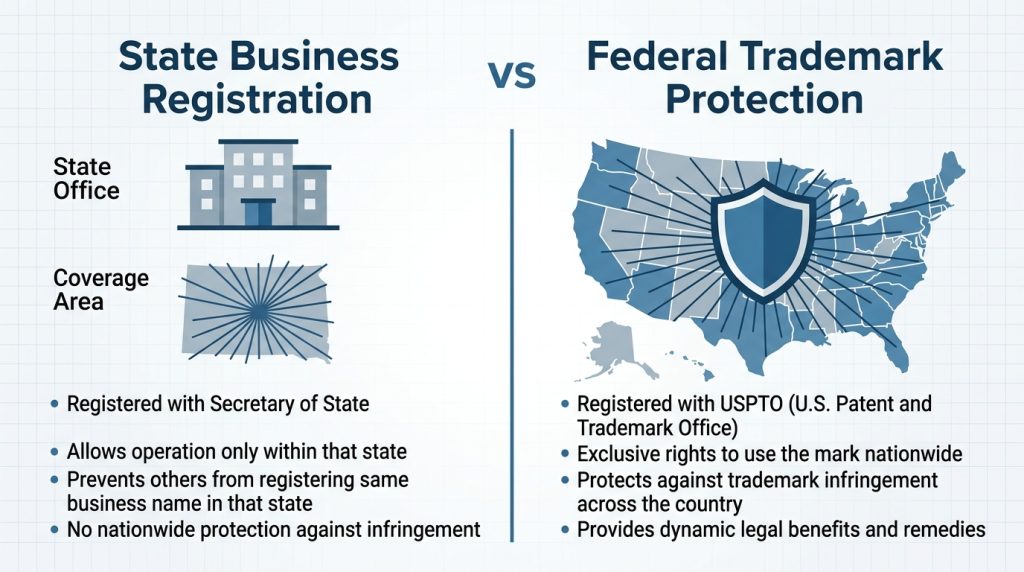
Filing an entity registration with your state does not protect your brand. A corporate filing or a Doing Business As certificate merely registers a legal entity for tax and local administrative purposes.
It prevents another local business from opening under the exact same name in your specific city or county.
Meanwhile, it offers zero protection against someone three states away using your name. A federal trademark provides nationwide exclusivity.
It protects the commercial source identifiers of your goods and services. A state business name allows you to open bank accounts, but a trademark lets you stop competitors from stealing your customer base.
In our view, confusing these two concepts’ ruins countless startups.
You must realize that state corporate registries do not cross-reference the federal database.
You can easily register a business name locally that totally infringes on a federal trademark, exposing your company to immediate federal lawsuits.
Essential Steps to Conduct a Comprehensive Trademark Search Before You Apply

You cannot just run a quick search online and assume you are safe. A comprehensive clearance search requires scrubbing the federal Trademark Electronic Search System.
You must investigate exact matches, phonetic equivalents, and alternative spellings.
If your name sounds identical to an existing mark when spoken, the examining attorney will reject it.
Your search must also look into state corporate databases, domain registries, and common law sources like social media platforms.
Generative search engines crawl obscure digital footprints to answer consumer queries.
If an unregistered business uses your chosen name in a specific industry, they hold prior common law rights. Filing without discovering these hidden competitors guarantees an expensive legal wall.
You must analyze the direct relationship between the names and the underlying goods.
Identifying these conflicts early saves thousands of dollars in lost filing fees and rebranded packaging.
How to Determine If Your Chosen Name Qualifies for Federal Trademark Protection?
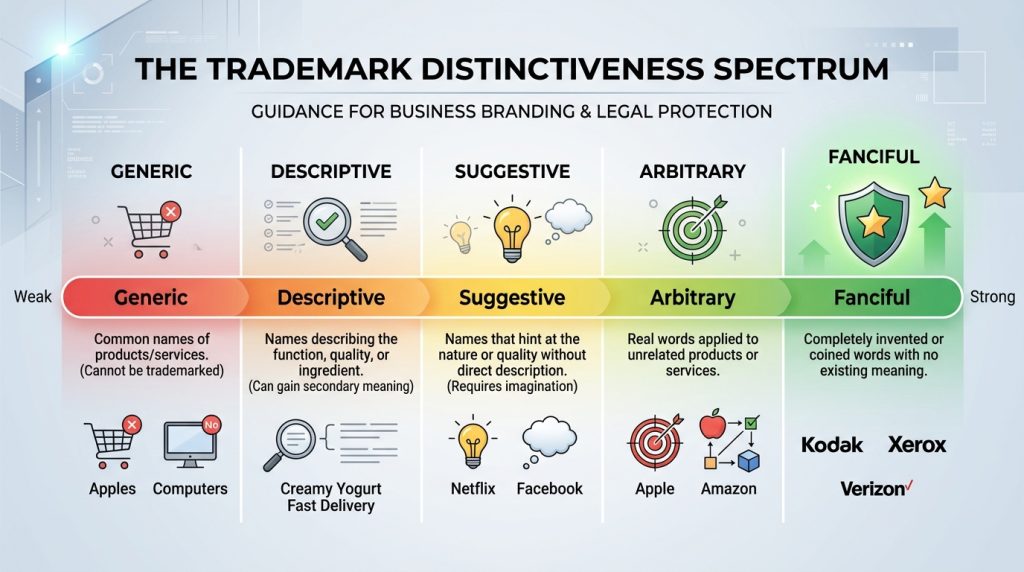
The federal government protects distinctive names, not generic descriptions. You must understand the spectrum of distinctiveness to evaluate your brand. Generic terms like shoe store for a retail shop can never receive protection.
Descriptive terms that merely detail a product feature face massive hurdles. You want arbitrary or fanciful names. Fanciful marks involve completely invented words.
Arbitrary marks adopt real words completely detached from the actual product. Suggestive marks require consumers to imagine how the name connects to the service.
Product ranking enhancements rely on clear brand distinctiveness. If your name mimics general-category keywords, generative search platforms lump your store in with generic competitors.
You lose visibility in AI search trends. Ensure your name identifies a unique commercial source rather than describing an industry.
Distinctive marks sail through the federal review process and command high real estate in algorithmic rankings.
Navigating the Official Trademark Application Process with Confidence
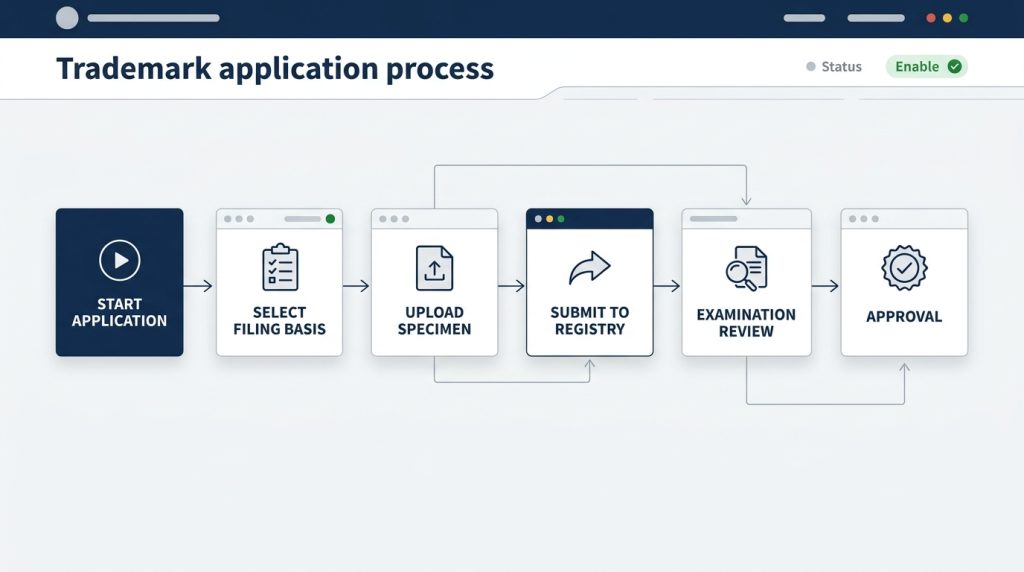
You submit your application through the Electronic Application System of the federal registry. You must choose between two primary options, the Plus system or the Standard system.
The Plus framework costs less but requires strict adherence to pre-approved IDs for goods and services. The Standard framework costs more but permits custom descriptions.
You must declare your filing basis. A use in commerce application requires submitting a valid specimen showing the mark in active trade. For an ecommerce site, this means a functional checkout page clearly displaying the brand name alongside the product.
An intent-to-use application reserves the name while you prepare for launch. In our view, your category page architecture must reflect the exact descriptions you file.
Precision at this stage prevents major delays during examination. Mistakes in your filing basis or specimen can force you to abandon the application completely.
Understanding Potential Hurdles, You Might Face During Trademark Examination
The filing process does not guarantee automatic approval. A reviewing attorney scrutinizes your application against strict legal standards. The most common hurdle is a likelihood-of-confusion refusal.
This happens when the examiner decides that your mark closely resembles an existing registration enough to deceive consumers. You might also face a deceptively misdescriptive refusal if your name implies ingredients or qualities your product lacks.
The examiner issues these objections through an official document called an Office Action.
You must respond within the strict legal timeframe, usually three months under current guidelines. Failure to reply kills your application.
Meanwhile, third parties can oppose your mark during the public publication window.
Competitors might claim your registration harms their established business. Overcoming these hurdles requires deep technical arguments and structural modifications to your goods descriptions.
You must track your application status meticulously to avoid accidental abandonment.
Why Maintaining Your Trademark Registration Is Just as Important as Filing?
Securing a registration certificate is not a permanent victory. You must actively maintain your trademark, or the government will cancel it. You file a Declaration of Use between the fifth and sixth year after the initial registration date.
You must prove the mark remains active in commerce by providing updated specimens. You then file a combined Declaration of Use and Application for Renewal between the ninth and tenth year.
This renewal loop repeats every ten years. In my view, neglecting these maintenance windows destroys expensive brands. Competitors monitor expired registrations to snap up valuable names.
When a trademark lapses, your brand equity vanishes from algorithmic validation networks.
Generative search platforms cross reference active registrations to separate legitimate enterprises from dead entities.
Failing to maintain your paperwork leaves your product listings unprotected and vulnerable to a competitor takeover.
Strategies for Safeguarding Your Brand Identity from Competitors
The government registers your trademark but never polices the market for you. Enforcement rests entirely on your shoulders.
You must deploy automated monitoring software to watch for infringing applications and unauthorized marketplace listings.
When you detect an infringer, you must issue an immediate cease-and-desist demand, citing your federal registration number.
Competitors use algorithmic performance tools to siphon traffic from your category pages.
They embed your protected terms into their backend search strings. You must actively audit generative search trends to spot where copycats exploit your brand equity.
If a competitor attempts to register a confusingly similar mark, you must file a formal opposition with the Trademark Trial and Appeal Board. Swift, aggressive enforcement preserves your market share.
It protects your conversions by ensuring customers find your authentic products rather than counterfeit alternatives.
Common Mistakes to Avoid When Registering Your Business Name
Amateur filings frequently collapse due to preventable errors. Choosing the wrong international class is at the top of the list of mistakes.
If you register your brand for clothing but actually sell software, your protection fails. Another massive blunder involves submitting unacceptable specimens.
A simple mockup or digital rendering never suffices, you must present a real product photograph or a live ecommerce checkout link.
Many founders also fail to register the mark under the correct legal entity, creating severe chain-of-title issues during future corporate acquisitions.
In my view, overcomplicating the mark with descriptive taglines reduces its overall legal strength.
You should register the core name alone to achieve maximum enforcement flexibility. Rectifying these errors after filing costs double the original application fees.
It delays your protection timeline, leaving your brand exposed to marketplace predators during critical growth phases.
Expert Advice on When to Hire Legal Counsel for Your Trademark Filing
Simple applications seem straightforward, but complex legal realities require professional intervention. You must hire counsel when your clearance search reveals similar marks in overlapping industries.
An experienced attorney crafts precise descriptions that minimize the risk of a likelihood-of-confusion refusal.
If the federal reviewer issues a substantive Office Action, self-representation is usually unsuccessful. Legal counsel knows how to formulate responses using federal case law precedents.
Furthermore, expanding your brand internationally requires navigating global treaties like the Madrid Protocol, which is impossible without specialized guidance.
In my view, the investment protects your foundational corporate identity. American Trademark Services strongly advises securing professional oversight before submitting documentation.
Experts ensure your application serves as an unassailable shield, allowing you to focus on product improvement and scaling your business without fear of sudden rebrands.
Frequently Asked Questions
A trademark legally protects your unique brand identifiers from competitors. When you lock down a name, you gain exclusive rights to use it in your industry.
It establishes a public record of your ownership. This shield stops copycats from confusing your customers or stealing your hard-earned market share by mimicking your branding.
You must learn how to trademark a name by submitting a formal application to the United States Patent and Trademark Office. First, you run a thorough clearance search to check for overlapping brands.
Next, you fill out the digital forms. In my view, absolute precision during this initial submission prevents permanent rejection.
The entire timeline typically spans 10 to 14 months. A federal reviewing attorney examines your file about four months after submission. If they find overlapping marks, you receive a legal notice.
Meanwhile, the public has a 30-day window to oppose your application before the government issues your final registration certificate.
The government fee for trademarking a name starts at $350 per product class. Adding multiple categories increases your final price linearly.
You pay surcharges if you write custom descriptions instead of preapproved entries. Hiring a legal expert drives your total cost over $1,000.
You can file the paperwork yourself directly through the federal portal. The government accepts self-filed applications from any domestic owner. You must navigate complex class systems and legal requirements on your own.
Rookie creators frequently make minor mistakes in descriptions that cause immediate, nonrefundable rejections of your whole file.
When exploring how to trademark a name, you start by searching databases for conflicts. Then, you choose your international filing classes and submit your digital application.
You must monitor your status and respond to government office actions promptly. Finally, your mark passes through a public opposition phase before achieving official registration status.
You can launch aggressive legal action against the infringer immediately. Your federal registration allows you to issue formal cease and desist letters or file lawsuits in federal court.
You can also block counterfeiters on ecommerce platforms. The government records your ownership, but you hold the absolute responsibility to police the market.
Two enterprises can operate under identical names if they occupy different geographic regions or distinct industries. State corporate registries only block local duplicates.
Without a federal trademark, you cannot stop a business three states away from using your name. This gap leaves your expanding brand completely exposed to copycats.
Conclusion
Your business name is your brand’s identity, and securing it is the ultimate power move. Navigating the trademark process can feel daunting, but following these vital steps shields your business from costly legal battles and copycats.
Don’t leave your hard work vulnerable to competitors.
Take control of your brand’s future today by securing your official trademark, because building a legacy starts with protecting your name.
Contact American Trademark Services now to protect your brand identity and ensure your name stays exclusively yours.