
A trademark is like a name tag for your brand. It can be your business name, logo, slogan, product name, or symbol. When people see it, they know the product or service belongs to you.
But registration is not always one simple payment. The trademark cost can include government fees, search fees, professional help, correction charges, renewal fees, and even dispute costs.
Some costs are clear at the start. Others show up later if the application has mistakes or someone challenges your mark.
This guide explains the main fees and the process in simple words, so you can plan your budget before you file.
What Is a Trademark and Why Should You Register One?

A trademark protects your brand identity. Imagine you open a bakery called “Golden Crust” with a wheat logo.
If another shop uses a very similar name or logo, customers may get confused. A registered trademark gives you stronger rights to stop that.
It can protect business names, logos, slogans, product names, brand symbols, and service names.
The real value of knowing trademark cost is not only saving money. It helps you avoid surprises and understand what you are paying for.
Main Factors That Affect Trademark Registration Cost
There is no single fixed price for every trademark. Your trademark cost depends on what you register, where you file, how many classes you need, and whether you hire a professional.
Type of Trademark Being Registered
A plain business name is usually simpler than a detailed logo. A slogan can be harder because it must be unique enough to protect. For example, “Fresh Bread Daily” may sound too common for a bakery, while “Baked With Morning Magic” feels more original.
Number of Trademark Classes
Trademark offices divide products and services into classes. Clothing, software, food products, and education services can all fall under different classes.
If you sell candles, you may need one class. If you sell candles and skincare products, you may need more. Each extra class can increase the price.
Filing Method: DIY vs Professional Assistance
Some people file by themselves to save money. Others hire an attorney or trademark expert to avoid mistakes. DIY filing may look cheaper at first, but one wrong class, weak description, or missed deadline can create problems later.
Official Government Filing Fees
Government filing fees are the main required charges. You pay them when you submit your application. These fees are usually non-refundable, which means you may not get them back if your application is refused.
This part of the trademark cost is important because it is the base amount every applicant must consider. The exact fee depends on the country, filing system, and number of classes.
Single-Class Filing Fees
A single-class application covers one category of goods or services. This is common for small businesses with a clear product or service. A designer may register under design services, while a coffee shop may register under café services.
Multi-Class Filing Fees
A multi-class application covers more than one category. A fitness brand may sell clothing, offer online training, and create nutrition guides. These may fall into different classes. More classes mean wider protection, but also higher official fees.
Professional or Attorney Fees
A trademark professional can help you check availability, choose the right class, prepare the application, and respond to objections.
Professional help can raise trademark cost, but it often protects you from bigger problems. Think of it like hiring a guide in a confusing city. You may reach the destination alone, but a guide can help you avoid wrong turns.
Trademark Search Fees
Before filing, you should search for similar trademarks. A simple search may show obvious matches, but a deeper search can find names that sound alike or look alike. For example, “KwickKart” and “QuickCart” may look different, but customers could still mix them up.
Application Preparation Fees
A strong application needs correct owner details, a clear trademark description, the right class, and proper use information. Small mistakes can delay the process or lead to refusal.
Legal Response or Office Action Fees
Sometimes the trademark office asks questions or raises objections. This is often called an office action. If this happens, you may need a legal response, especially if your mark looks too similar to another mark or uses common words.
Step-by-Step Trademark Registration Process
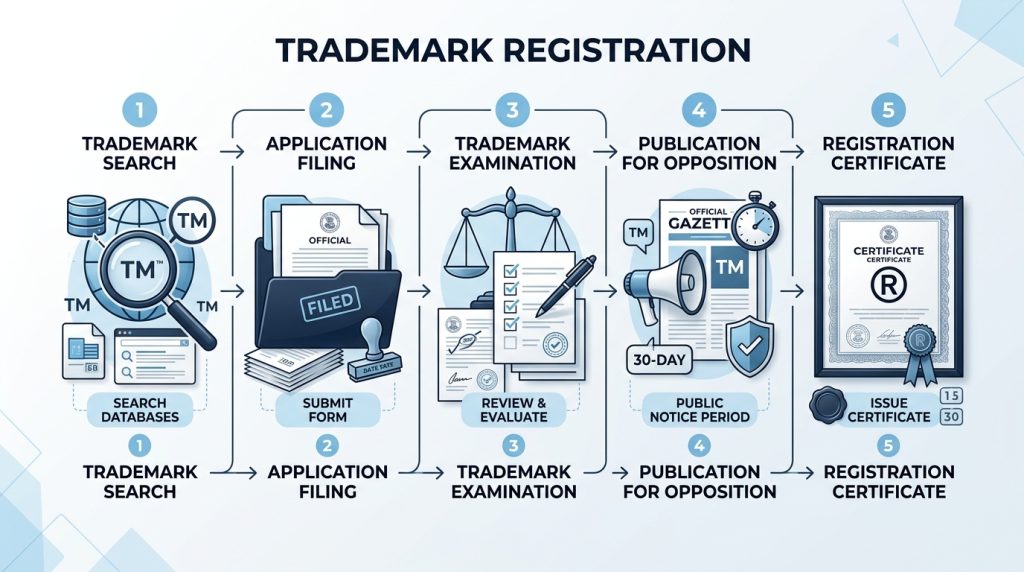
The process is easier when you see it step by step. First, search for similar marks. Then choose the right class. After that, prepare and file the application with accurate details.
Next, the trademark office examines your application. They check if your mark follows the rules and whether it conflicts with existing trademarks.
If it passes, it may be published for opposition, which means other people get a chance to object.
If no serious problem appears, the office approves the application and issues a registration certificate. This certificate confirms your trademark rights in the approved class or classes.
Hidden Charges Many Applicants Overlook
Hidden charges can change trademark cost quickly. These are the costs people often forget when they first make a budget.
Common hidden charges include:
- Detailed search reports
- Changes after filing
- Responses to objections
- Opposition or dispute handling
- Renewal fees
- International filing fees
- Refiling after rejection
Incorrect Filing or Amendment Fees
If your application has mistakes, you may need to correct them. Some corrections are simple, while others may require a new filing. This can waste time and money.
Opposition or Dispute Costs
An opposition happens when another party challenges your trademark. This can become expensive because it may involve legal arguments, evidence, and professional support.
Renewal Fees
A trademark does not always stay active forever without action. In many countries, you must renew it after a set number of years. Missing a renewal deadline can put your rights at risk.
International Trademark Filing Costs
A trademark registered in one country usually protects you only in that country. If you want protection in other countries, you may need separate filings or an international system.
DIY Trademark Filing: Is It Really Cheaper?
DIY filing can be a good choice if your brand is simple, your class is clear, and you understand the rules. It may save money in the beginning.
But a low trademark cost at the start does not always mean the cheapest result in the end. If your application is rejected or challenged, you may spend more fixing the problem than you would have spent getting help earlier.
DIY can work well when your brand name is unique, you need one class, you have checked similar trademarks, and you can track deadlines.
When Is It Worth It to Hire a Trademark Professional?
Professional help is worth considering when your brand is central to your business. It is also helpful if you plan to expand, sell many types of products, or file in more than one country.
You should strongly consider help if your industry is crowded, your name has common words, you need several classes, you received an office action, or your brand has high business value.
A good professional does more than fill out forms. They help you make smarter choices before money is spent.
How to Reduce Trademark Registration Costs
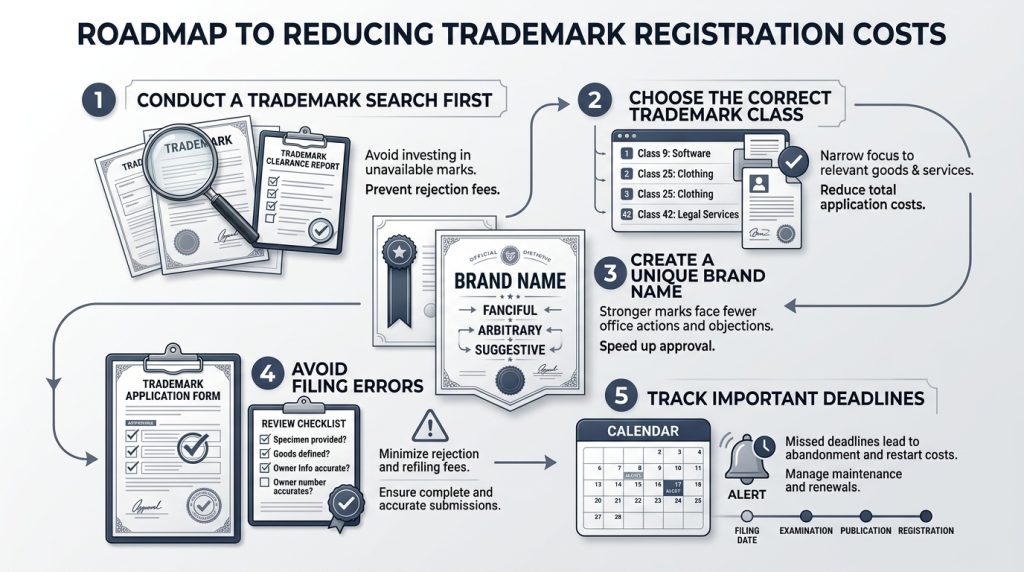
The best way to control trademark cost is to prepare before you file. A careful start can prevent expensive problems later.
Start with a clear search. Then choose the correct class. Make sure your brand name is strong, unique, and not too close to another business. Also, avoid filing for classes you do not need yet.
Helpful ways to save include:
- Search before applying
- Pick a unique brand name
- Choose the right class from the start
- Prepare all details before filing
- Avoid unnecessary classes
- Track all deadlines
Good planning does not mean spending the least amount possible. It means spending wisely.
Estimated Trademark Fee Breakdown Table
The exact amount depends on your country, business type, number of classes, and whether you hire a professional.
For a simple one-class application, many small businesses may spend a few hundred dollars if they file themselves.
With professional help, the total can often reach $1,000 or more. If there are objections, disputes, or international filings, the amount can increase much more.
| Cost Category | Estimated Range | What It Covers |
|---|---|---|
| Government filing fee | $250–$750+ | Official fee for submitting the application, depending on country and number of classes |
| Trademark search | $0–$500+ | Basic DIY search or professional search report |
| Attorney/professional fees | $300–$2,000+ | Help with search, filing, class selection, and application review |
| Office action response | $500–$1,500+ | Legal reply if the trademark office raises an objection |
| Amendment or correction fees | $100–$500+ | Fixing errors or making changes after filing |
| Opposition/dispute costs | $1,000–$5,000+ | Handling challenges from another business |
| Renewal fees | $300–$1,000+ | Keeping the trademark active after several years |
| International filing | $1,000–$5,000+ | Registering or protecting the mark in other countries |
Common Mistakes That Increase Trademark Expenses
Many trademark problems come from simple mistakes. Common ones include choosing a name that is too common, skipping the search, selecting the wrong class, using unclear descriptions, missing deadlines, or filing only a logo when the business name also needs protection.
Another mistake is waiting too long. If your brand grows before you protect it, someone else may file a similar name first. Fixing that problem can be stressful and expensive.
Conclusion
Registering a trademark is not just paperwork. It protects the name, look, and trust your business is building. When you understand trademark cost, you can plan with confidence instead of guessing.
The smartest approach is simple: search first, file carefully, choose the right class, and keep future fees in mind. You do not need to overcomplicate the process. You just need to know where the money may go and how to avoid unnecessary surprises.
A trademark can become one of your most valuable business assets. Treat it with care from the start, and it can protect your brand for years.
Frequently Asked Questions
In the USA, the basic USPTO trademark filing fee is usually $350 per class. This includes the official application review by the USPTO. However, it does not include attorney fees, detailed trademark searches, office action responses, amendments, renewal fees, or international protection.
The trademark filing process in the USA usually takes around 12 to 18 months. It may take longer if the USPTO raises objections, requests more information, or if another business opposes the application. A complete and accurate application can help avoid unnecessary delays.
The main USPTO fee is the application fee, usually $350 per class. Extra fees may apply for missing information, custom goods or services descriptions, intent-to-use filings, statement of use submissions, extension requests, and future maintenance or renewal filings after registration.
No, the trademark cost is not the same for every business. It depends on the number of classes, type of trademark, filing method, attorney involvement, and whether the application faces objections or disputes. A simple one-class filing usually costs less than a multi-class or complex application.
Hidden charges may include professional search fees, attorney fees, office action response costs, amendment fees, opposition costs, extra class fees, and future renewal fees. These charges often appear when the application has errors, needs legal clarification, or is challenged by another trademark owner.
You can file a trademark yourself if your case is simple and you understand the process. However, a lawyer can help with searches, class selection, legal wording, and USPTO objections. Professional help is useful when your brand is valuable, complex, or similar to existing trademarks.
Common mistakes include skipping a proper search, choosing the wrong class, using a weak or common name, submitting unclear descriptions, missing deadlines, and assuming a business name or domain name gives trademark protection. These mistakes can cause delays, refusals, or extra costs.
Yes, additional fees apply after approval because trademarks must be maintained. In the USA, owners must file maintenance documents between the fifth and sixth year, then renewal documents around the ninth and tenth year, and every 10 years after that to keep protection active.
Small businesses should budget for more than the filing fee. They should consider search costs, possible attorney help, extra class fees, office action responses, and future renewals. Starting with the most important brand name and only necessary classes can help control expenses.
Trademark registration can be more affordable by choosing a unique brand name, searching before filing, using correct USPTO descriptions, filing only in needed classes, and preparing complete details from the start. Good preparation helps reduce mistakes, delays, and extra professional fees.
Need Help with Trademark Costs?
Understanding trademark cost, fees, and the complete registration process can be confusing, especially if you are doing it for the first time. A small mistake in filing or class selection can lead to extra expenses and delays.
Our trademark registration services help you handle everything correctly from the start, so you can avoid costly errors and protect your brand with confidence.