The internet has made it easier than ever for businesses to grow. A small brand can now sell products across the world, reach customers through social media, appear on Google, and build a strong name without needing a huge office or a giant team.
That is the good side of the digital world. But there is another side too.
When your brand becomes visible online, other people can copy it, misuse it, or pretend to be you. Someone can create a fake website using a similar name.
A scammer can open a fake social media page with your logo. A seller can list fake products under your brand name. Someone can even copy your website content, images, or product details and use them as their own.
This is where digital brand protection becomes important. It helps businesses protect their name, logo, content, customers, and reputation from online misuse. In simple words, it helps make sure that people online know which brand is real and which one is fake.
What Is Digital Brand Protection?
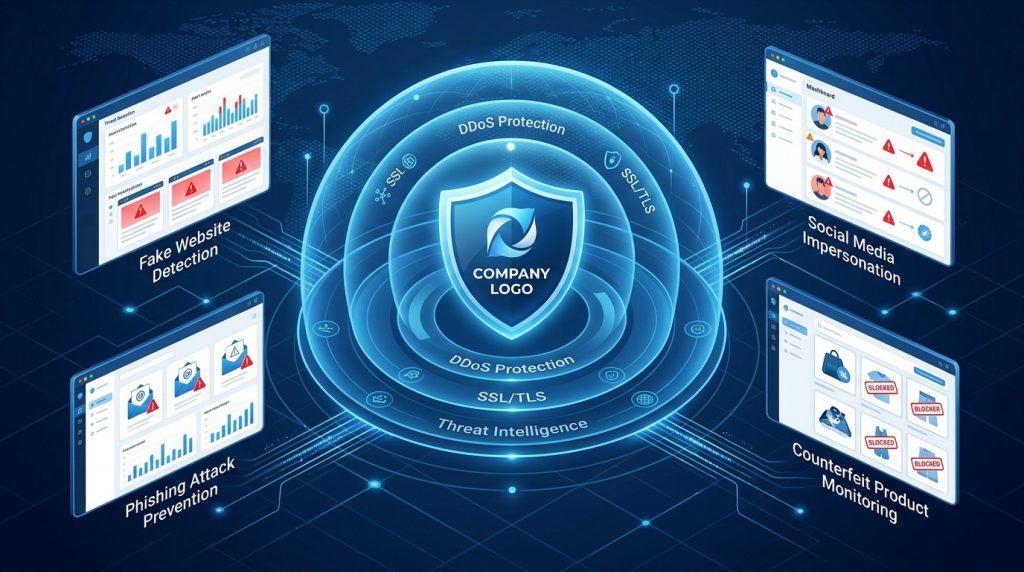
Digital brand protection means protecting your business identity across the internet. It includes finding and stopping fake websites, copied content, scam pages, fake product listings, trademark misuse, and other online threats that can harm your brand.
Think of your brand like your house. Your logo, website, domain name, product photos, and social media pages are like the doors, windows, and signs outside that house.
If someone copies your sign and puts it on a fake house, people may get confused. They may walk into the wrong place, trust the wrong person, or lose money.
That is why digital brand protection works like a security system for your business online. It keeps watch over the internet and helps you take action when someone uses your brand without permission.
It is not only for big companies. Small businesses, online stores, service providers, personal brands, authors, agencies, and creators also need it. If your brand exists online, it can be copied online.
Key Elements of Digital Brand Protection
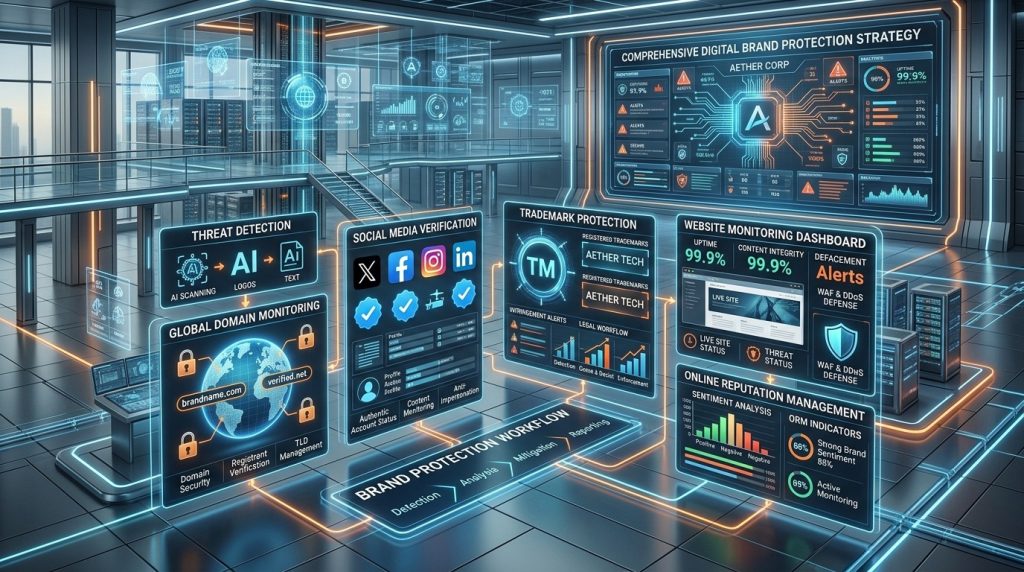
A complete brand protection plan looks at many parts of the internet. It is not only about checking your website once and then forgetting about it. It means watching different areas where your brand may appear.
One key area is domain monitoring. This means checking if someone has registered a website name that looks almost like yours. For example, they may change one letter, add a word, or use a different ending like .net instead of .com. These fake domains can trick customers.
Another area is social media monitoring. Fake profiles can appear on platforms like Facebook, Instagram, TikTok, LinkedIn, or X. These accounts may pretend to be your official brand and message your customers.
Marketplace monitoring is also important. If you sell products, someone may list fake or low-quality copies on Amazon, eBay, Etsy, Walmart, or other online stores. This can damage your sales and your reputation.
Content monitoring matters too. People may copy your blog posts, images, videos, designs, product descriptions, or full website pages. When this happens, your original work loses value.
Digital brand protection also includes watching for trademark misuse, logo copying, fake ads, phishing pages, and online scams connected to your business name.
Why Digital Brand Protection Matters for Modern Businesses
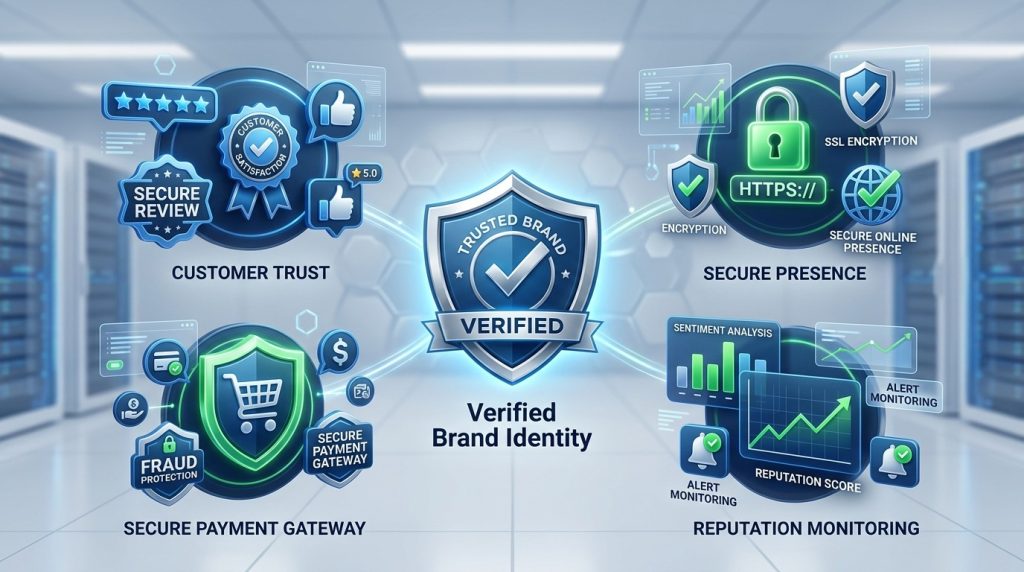
People buy from brands they trust. When customers visit your website, follow your social media page, or buy your product, they believe they are dealing with the real business. If someone uses your brand name to mislead them, that trust can break very quickly.
Digital brand protection matters because the internet moves fast. A fake page can go live in minutes. A copied product listing can start stealing sales the same day. A scam message can reach hundreds of people before you even know it exists.
For a business, this can create serious problems. Customers may blame you for something you did not do. They may think your product quality is poor because they bought a fake version. They may leave bad reviews. They may stop trusting your brand.
This is why businesses cannot wait until damage happens. They need to protect their online identity before small problems turn into bigger ones.
Protects Customer Trust
Customer trust is one of the most valuable things a business can have. It takes time to build, but it can be damaged very quickly.
Imagine a customer searches for your brand online and finds a fake website that looks almost real. They place an order, but they never receive the product. Later, they complain about your company, even though you had nothing to do with it.
That kind of confusion hurts your brand. The customer does not always know who is real and who is fake. They only remember that they had a bad experience with a name that looked like yours.
Digital brand protection helps stop this by finding fake websites, fake pages, and fake listings before they harm more people. It gives customers a safer experience and helps them feel confident when they interact with your brand.
Prevents Revenue Loss
Online brand misuse does not only hurt trust. It can also take money away from your business.
Fake sellers may use your brand name to sell cheaper copies. Scammers may drive traffic to fake websites instead of your real site. Competitors or bad actors may copy your content and use it to rank on Google.
Unauthorized sellers may offer your products in ways that harm your pricing and brand image.
Every fake listing, copied page, or scam account can pull customers away from the real business. For small businesses, even a few lost sales can matter. For larger businesses, the loss can become huge.
That is why digital brand protection is also a revenue protection strategy. It helps keep customers, traffic, and sales connected to the real brand.
Reduces Legal and Compliance Risks
When someone misuses your brand name, logo, or content, legal issues may follow. If you ignore the problem for too long, it may become harder to stop later.
For example, if another business keeps using a similar logo or name, customers may start confusing both brands. If copied content spreads across many websites, it may become difficult to prove where it started. If fake sellers keep offering unsafe products under your name, customers may report the wrong company.
A strong brand protection process helps you collect proof, report misuse, and take action early. This may include platform complaints, DMCA takedowns, trademark reports, hosting provider notices, or legal support when needed.
Digital brand protection does not replace trademark registration, but it supports it. A trademark gives you legal rights, while brand protection helps you enforce those rights online.
Protects Your Online Reputation
Your online reputation is how people feel about your business when they see your name on the internet. Good reviews, clear branding, helpful content, and professional social pages all help build a strong image.
But fake activity can damage that image. Fake reviews, scam pages, copied posts, phishing messages, and low-quality counterfeit products can make your brand look careless or unsafe.
The worst part is that many customers will not investigate the full story. They may simply move away from your brand. They may choose a competitor because they feel unsure.
Digital brand protection helps keep your online image clean, clear, and trustworthy. It helps make sure your brand is represented in the right way.
Common Digital Threats Businesses Face Online
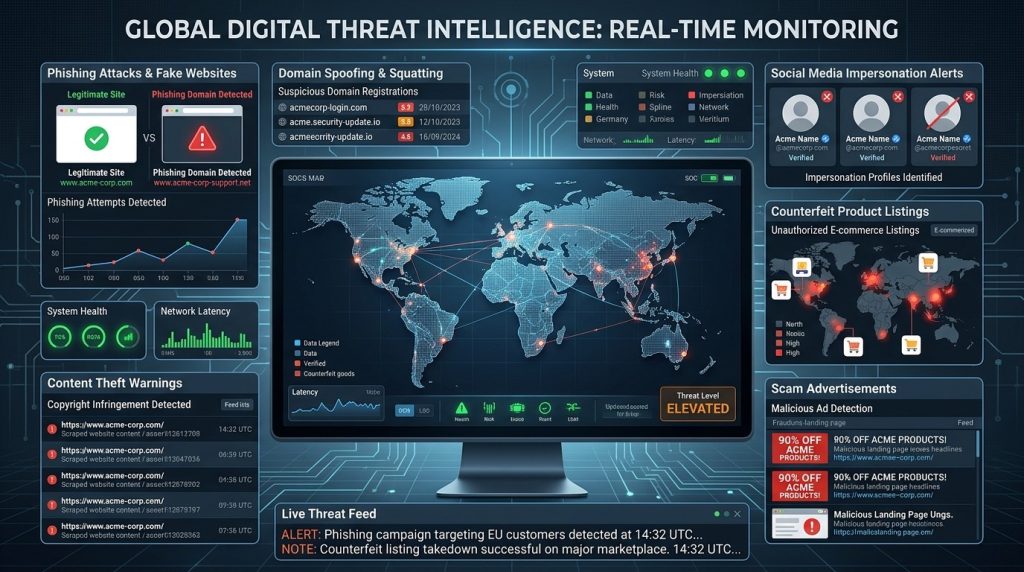
Many business owners think brand threats only happen to famous companies. That is not true. Any business with a name, website, logo, or online presence can become a target.
One common threat is fake websites. These websites may use a similar domain name, copy your design, and pretend to sell your products or services. Some may collect payments, while others may steal personal details.
Another threat is social media impersonation. Fake accounts may use your logo and photos to contact customers, run fake giveaways, or ask for money.
Counterfeit products are also a major issue for ecommerce brands. Customers may buy fake items and then blame the original company when the quality is poor.
Content theft is another common problem. People copy blogs, product pages, graphics, videos, and images to make their own business look more professional.
Trademark and logo misuse can also create confusion in the market. When other people use your brand elements without permission, they weaken your identity.
Phishing is one of the most dangerous threats. Scammers may use your brand name to trick people into sharing passwords, card details, or private information.
How Digital Brand Protection Works
Digital brand protection usually works in a few clear steps.
The first step is monitoring. This means checking search engines, domain names, social media platforms, marketplaces, websites, apps, and ads to find possible misuse.
The second step is detection. Once something suspicious appears, the business needs to decide if it is truly harmful. Not every mention is a threat. Some mentions may be reviews, news, or customer posts. The goal is to find real misuse.
The third step is evidence collection. Before reporting a fake page or copied content, you should save proof. This can include screenshots, URLs, dates, account names, product listings, and any messages connected to the misuse.
The fourth step is enforcement. This may include reporting the issue to a social media platform, sending a DMCA notice, filing a trademark complaint, contacting a hosting company, or asking a marketplace to remove a fake listing.
The final step is prevention. A business should keep watching, secure important domains, register official social handles, use clear brand guidelines, and respond quickly when new problems appear.
Which Businesses Need Digital Brand Protection?
Almost every business with an online presence can benefit from brand protection. Ecommerce companies need it because fake products and copied listings can steal sales.
Service businesses need it because scammers can pretend to offer the same services under a similar name. SaaS companies need it because phishing sites can target their users.
Agencies need it because copied portfolios and fake profiles can hurt credibility.
Authors, coaches, consultants, healthcare brands, finance companies, influencers, creators, and local businesses also need protection. If customers search for your name online, your brand identity matters.
Even a small business should take this seriously. You do not need to be famous to be copied. Sometimes scammers target smaller businesses because they think those businesses are not watching.
Benefits of Digital Brand Protection
The biggest benefit is trust. When customers can clearly find your real website, real social pages, and real products, they feel safer doing business with you.
Another benefit is control. Your brand has a voice, look, style, and message. When others copy or misuse it, that control becomes weak. Brand protection helps you maintain a consistent identity.
It also protects revenue. By removing fake listings, scam pages, and copied stores, you help keep customers connected to your real business.
It can also save time and stress. When you have a process in place, you do not panic every time something goes wrong. You know what to check, what proof to collect, and where to report the issue.
Most importantly, it helps your business grow with confidence. When your brand is safer online, you can focus more on marketing, sales, customer service, and long-term growth.
Digital Brand Protection vs Trademark Protection
Trademark protection and digital brand protection are connected, but they are not the same thing.
A trademark protects names, logos, slogans, or symbols that identify your business. It gives you legal rights and helps stop others from using something too similar in your industry.
Digital brand protection focuses on finding and stopping online misuse. It looks at fake websites, social media impersonation, copied content, counterfeit listings, scam ads, and phishing pages.
Think of trademark protection as owning the rights to your brand name and logo. Think of brand protection as watching the internet to make sure no one is abusing those rights.
The best approach is to use both. A trademark gives you stronger legal standing, while active online monitoring helps you catch problems faster.
How Businesses Can Start Protecting Their Brand Online
The first step is to secure your main domain name. You should also consider buying common variations if they are important to your brand. This can stop others from using similar names to confuse customers.
Next, claim your official social media handles. Even if you do not use every platform right away, securing your name can prevent fake accounts from taking it.
You should also trademark key brand assets when possible. This may include your business name, logo, product names, or slogan.
Another smart step is to check search results often. Search your brand name, product names, and common misspellings. Look for fake pages, copied content, or strange websites.
Use clear brand guidelines. These guidelines should explain how your logo, colors, fonts, tone, and images should appear. This makes it easier to spot misuse.
Finally, create a response plan. Know how to report fake pages, collect evidence, contact platforms, and escalate serious issues.
Mistakes Businesses Should Avoid
One common mistake is waiting too long. Many businesses ignore small cases of copying because they think they are not serious. But small issues can grow.
Another mistake is not saving proof. If you report a fake page without screenshots or links, it may become harder to support your claim.
Some businesses forget to register related domains or social handles. This leaves space for others to misuse similar names.
Another mistake is thinking platforms will protect your brand automatically. Most platforms only act when you report a problem properly.
Businesses should also avoid using unclear branding. If your own brand identity is not consistent, it becomes harder to prove when someone else is copying it.
Conclusion
Your brand is more than a logo or a website. It is the trust people place in your business. It is the feeling customers get when they see your name. It is the promise you make every time someone chooses you over another option.
The internet gives businesses amazing opportunities, but it also creates new risks. Fake websites, copied content, scam accounts, counterfeit products, and phishing pages can damage your name, confuse customers, and reduce sales.
That is why digital brand protection is so important. It helps businesses protect trust, revenue, reputation, and long-term growth.
A strong brand does not only need good marketing. It also needs protection. When you protect your brand online, you protect the people who believe in it.
Frequently Asked Questions
Digital brand protection means monitoring the internet for fake websites, copied content, fake sellers, impersonation, trademark misuse, and scams using your brand name. It works by finding misuse, collecting proof, reporting violations, and removing harmful online activity.
It protects customer trust, brand reputation, and sales. Today, fake websites, scam accounts, and copied products can appear quickly online. Digital brand protection helps businesses stop these threats before they confuse customers or damage the brand.
Companies can monitor online marketplaces, check unauthorized listings, report fake sellers, register trademarks, secure product images, and use official seller verification. They should also collect screenshots, listing links, and seller details before filing removal complaints.
The main threats include fake websites, domain squatting, counterfeit products, copied content, social media impersonation, phishing scams, fake ads, trademark misuse, and unauthorized sellers. These threats can hurt trust, traffic, revenue, and customer safety.
It helps businesses detect unauthorized use of their name, logo, content, or products early. Once the misuse is found, the company can send takedown requests, file platform complaints, issue DMCA notices, or take legal action when needed.
Businesses use domain monitoring tools, social listening tools, marketplace monitoring software, reverse image search, search engine alerts, trademark monitoring tools, and cybersecurity tools. These tools help find fake pages, copied content, suspicious listings, and brand misuse.
Brand protection helps eCommerce businesses stop fake sellers, counterfeit products, copied listings, and scam stores. This keeps customers safer, protects product value, improves trust, and helps real sales go to the official business instead of unauthorized sellers.
You can collect evidence, contact the platform, send a takedown request, file a trademark complaint, or use a DMCA notice if your content was copied. Serious cases may require legal support to stop the misuse and protect your rights.
Small businesses can protect their name, website, logo, content, and customer trust. These services help find fake pages, copied content, and impersonators early, so small brands can avoid reputation damage and lost sales.
Trademark protection gives legal rights over your brand name, logo, or slogan. Brand protection focuses on finding and stopping online misuse, such as fake websites, copied content, impersonation, and counterfeit listings. Both work best together.
Let’s Keep Your Brand Safe Together
Your brand is one of your most valuable business assets, and in today’s digital world, it can be copied, misused, or impersonated at any time. Fake websites, social media scams, and counterfeit listings can damage your reputation and cost you real customers.
Don’t wait until the damage is done. Take control of your online presence today.
With our digital brand protection services, we help you monitor your brand across the internet, detect unauthorized use, and remove fake content before it harms your business.