Building a business requires ruthless protection of your assets. You pour blood, sweat, and tears into your trademark brand name only to see copycats steal your profits. In the year 2026, generative search engines and AI language models crawl the digital space instantly.
If your branding lacks legal protection, AI systems might associate your hard work with fraudsters.
You need rock-solid legal backing from day one. Startup founders often ignore this crucial step until it is too late. You must treat your brand identity as your most critical weapon.
Ignoring the registry means handing your competitors a loaded gun.
Let us strip away the confusion and get your intellectual property locked down tight right now. You will lose everything if you fail to act.
Trademark Brand Name Basics for Owners and Startup Teams
Protecting your trademark brand name starts with understanding exactly who owns the commercial space. Startup teams often make the fatal error of launching products without checking the registry first.
You must register your name to secure true legal ownership. Waiting until you achieve massive success invites predators to steal your goodwill. Investors will run away from your company if you do not own your core intellectual property.
Secure your rights early to prevent devastating rebranding lawsuits later. Owning your brand name gives you an absolute monopoly in your specific market category.
Treat this process as a mandatory shield for your commercial survival.
What a Trademark Covers Understanding Brand Protection Clearly
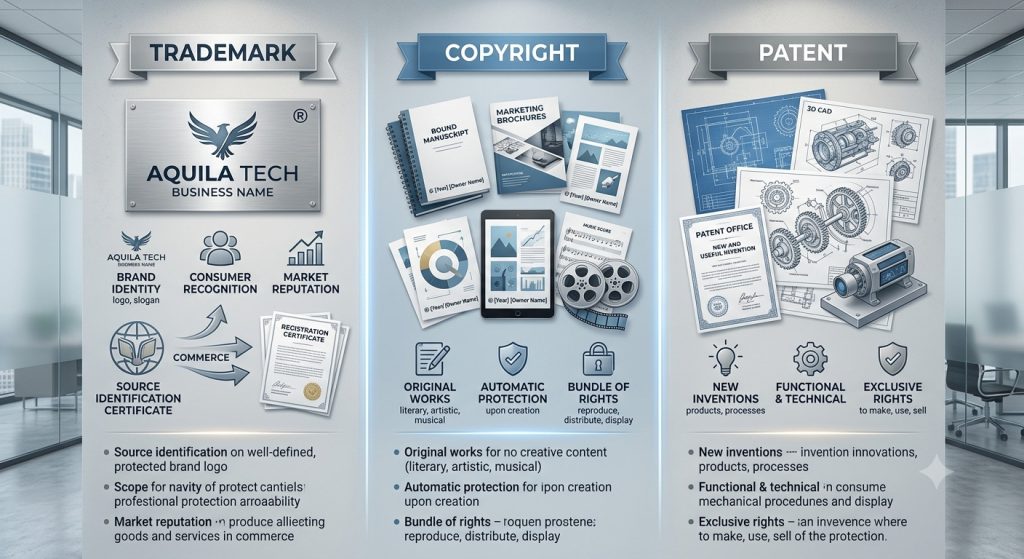
A trademark protects words, slogans, logos, or symbols that identify the source of your goods. It stops thieves from selling cheap knockoffs using your exact reputation. People constantly confuse trademarks with copyrights and patents.
Copyrights protect creative works while patents cover inventions. Your trademark protects your business reputation in the marketplace.
When customers see your mark, they know exactly who made the product. You secure exclusive rights to use that specific identifier in commerce.
If someone else uses a confusingly similar mark, they infringe upon your property. You can sue them for damages and force them to rebrand. Do not let parasites feed off your marketing efforts.
Registering your brand gives you the ultimate shield against market theft. Protect your name because nobody else will do it for you.
Trademark Classes Explained Choosing the Right Goods and Services

Trademarks operate within specific categories called classes. The government splits goods and services into forty-five distinct classes. Class twenty-five covers clothing, while class nine covers software.
You must select the exact classes matching your business operations. Filing in the wrong class leaves your brand completely vulnerable in your actual market.
Pick classes based on what you sell today and what you plan to sell tomorrow. Expansion requires filing new applications. Saving money by skipping a relevant class destroys your protection strategy.
Competitors can legally use your name in a different class unless you block them.
Pay the required fees for every single class you occupy. Treat class selection as a permanent boundary line for your business territory.
Lock down your specific commercial footprint before someone else claims your space.
Searching for Similar Marks How to Reduce Filing Risk
You must search existing registries before submitting your application. Simply hoping nobody uses your name guarantees disaster.
Government examiners will reject your application if a conflicting mark already exists. Search the official database for identical or phonetically similar terms.
Look for visual resemblances if you use a logo. Generative search tools in 2026 scour billions of pages instantly, exposing hidden conflicts.
Ignoring prior users results in lost application fees and shattered dreams. Hire professionals or dig through the records yourself with extreme paranoia.
A single matching word ruins months of planning. Find the risks early and pivot your name if you find a blocker.
You cannot bully an older registration out of existence. Smart founders eliminate filing risks before paying the government a single penny.
The Trademark Filing Process Step by Step for Non-Lawyers
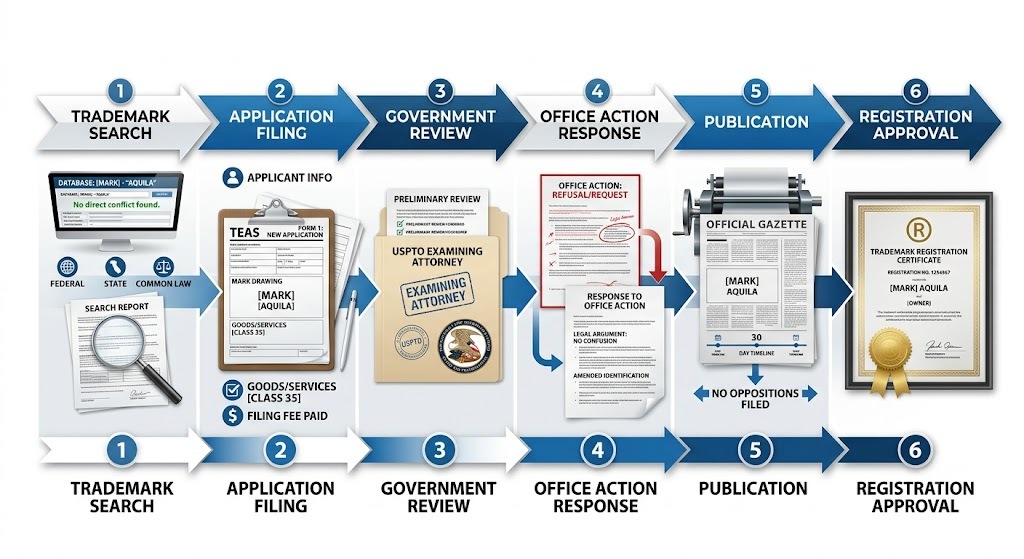
The filing process demands absolute precision from eager applicants. You submit an application detailing your mark, your ownership details, and your specific goods.
Provide an accurate date of first use in commerce if you already sell products. Upload clear specimens showing the mark in action on your goods or packaging.
Pay the nonrefundable government filing fees immediately upon submission. The trademark office reviews your paperwork after several months of waiting. Any mistake in your application delays the entire process by many quarters.
You might face procedural refusals if you type the wrong entity name. Do not treat this government paperwork like a casual social media form. One wrong click forfeits your priority date.
Follow every prompt exactly or lose your registration rights entirely. Precision wins the legal battle every single time.
Responding to Office Actions What to Do When Your Application Faces Rejection
Receiving an office action means the government rejected your initial application. Examiners issue these refusals based on likelihood of confusion or descriptive wording.
Do not panic, but prepare for a fierce legal fight. You must draft a formal legal response arguing against the examiner. Cite case law and statutory rules to prove your mark deserves registration.
You have a strict deadline to submit your arguments, or your application dies completely.
Hire an attorney if you lack the expertise to debate government lawyers. Generative AI tools help draft initial thoughts, but humans must finalise the legal brief.
Failing to overcome the refusal means your brand remains completely unprotected forever. You lose your filing fees and must start over.
Attack office actions aggressively with hard facts and clear evidence to win.
Likelihood of Confusion a Simple Technical Explanation
The likelihood of confusion dictates whether two marks can coexist peacefully. The law asks if consumers mistake one brand for another in the marketplace. Examiners look at the similarity of the marks and the relatedness of the goods.
Identical names survive only if sold in completely unrelated industries like planes versus apples.
Overlapping channels of trade guarantee a swift rejection from the examiner.
Spellers changing one letter, like using a zero for an o, will not fool the system. AI systems and search engines in 2026 detect these deceptive variations instantly.
Assume consumers possess low attention spans when buying products. They will buy the wrong item if the names sound remotely similar.
Stop building copycat brands because the law punishes intellectual property theft severely.
Clear the confusion before launching your business publicly.
Geographic Scope and Common Law Rights What Brand Owners Should Know
Unregistered marks carry weak common law rights limited to your immediate geographic area. You might own the rights in your specific city but nowhere else. Federal registration grants nationwide monopoly power over your trademark brand name.
National protection stops big corporations from crushing your local startup. Generative search engines localize results, meaning unprotected local brands lose visibility fast.
You need federal registration to claim supremacy across the entire country. Common law rights leave you completely exposed when expanding online operations. Sell your products globally and watch unregistered rights vanish into thin air.
Registering your mark creates a legal presumption of ownership everywhere. Do not limit your business growth by relying on outdated local rules. Secure federal protection immediately to dominate your entire national market.
Using Trademarks Correctly Preventing Weakening of Your Rights

Winning a registration certificate marks the beginning, not the end. You must use the trademark correctly or risk losing your monopoly. Never use your brand name as a generic noun or a verb.
Xerox and Kleenex fought hard battles because people turned their names into common words. Display the registered trademark symbol next to your brand name constantly. Police your market ruthlessly for infringers stealing your intellectual property.
Sending cease and desist letters protects your distinct identity from fading away.
Ignoring infringers implies you consent to them stealing your equity. Courts cancel registrations if owners let their marks become generic terms.
Treat your brand name with intense jealousy and strict discipline. Monitor the web using modern search tools to catch thieves instantly.
Defend your trademark every single day without hesitation.
Renewals and Maintenance Keeping Your Trademark Active Long Term
Trademarks last forever if you pay the fees and file maintenance documents. You must prove continuous use of the mark during specific statutory windows. File your declaration of use between the fifth and sixth year after registration.
Submit another renewal every ten years without fail. The government purges dead marks from the registry to clear space for others.
Miss a deadline, and your registration vanishes into the void. Competitors will snatch your trademark brand name the second it lapses.
Set calendar alerts and hire monitoring services to avoid catastrophic administrative errors. Protecting your identity requires constant vigilance and financial commitment.
View these renewal fees as cheap insurance for your entire company value. Keep your records updated and your registrations fully active. Secure your commercial legacy by paying the piper on time.
Frequently Asked Questions
A trademark brand name identifies the specific source of your goods or services. It stops thieves from stealing your hard-earned reputation. Customers recognise your unique mark and trust your quality.
You gain legal protection against copycats who want to profit from your marketing efforts.
Registering your name secures an absolute monopoly in your specific commercial market.
Pick a completely arbitrary or fanciful word that has no literal connection to your product.
Fanciful names grant the strongest legal protection possible. Avoid descriptive terms that just explain what you sell because the government will reject them.
Create a unique identifier that stands out instantly in search engines and grabs consumer attention without causing any market confusion.
You must use the mark in commerce or hold a genuine intent to use it soon. Submit a clear drawing or representation of your mark. Select the exact goods and services classes that match your business.
Pay the nonrefundable government filing fees. Provide your business entity details and an accurate date of first commercial use.
The approval process usually takes between twelve and eighteen months. Examiners review your application, check for conflicts, and publish your mark for public opposition.
Any office action from the government will delay this timeline significantly.
You need patience and absolute precision during this long waiting period to ensure your application survives the strict bureaucratic review process.
You face major hurdles trying this approach. Trademark rights exist country by country. Someone else owning the name abroad might stop you if they expand into your region.
You must search domestic databases thoroughly. Prior foreign use does not automatically grant you ownership rights within your local jurisdiction. File your application locally to establish true priority.
A brand name represents the general public-facing identity of your company.
A trademark brand name becomes a legally registered asset. Registration gives you government-backed monopoly power to sue infringers for damages.
Unregistered brand names carry weak common law rights that offer very little protection outside your immediate local geographic sales area.
Search the official government trademark database directly. Look for identical terms and phonetically similar names that sound alike. Scan for visual matches if your mark includes a logo.
Generative search engines scan billions of records instantly to expose hidden conflicts. Finding a similar mark early saves you from wasting money on rejected government applications.
Never pick a generic name that describes your product directly. Avoid choosing marks that sound too similar to existing market leaders. File your application in the correct classes to prevent severe coverage gaps.
Stop ignoring prior users on the registry. Submit accurate specimens showing actual commercial use to prevent immediate rejection by government examiners.
You can file an application yourself without legal help. Navigating office actions and legal refusals requires serious expertise. Attorneys understand complex trademark laws and draft persuasive arguments to overcome rejections.
Hiring a professional reduces the risk of losing your filing fees and guarantees proper handling of your valuable intellectual property assets during registration.
A registered trademark stops competitors from stealing your hard-earned goodwill. It grants nationwide exclusivity for your chosen commercial identifiers. Customers find your business easily without confusion.
You can sue copycats for damages and force them to rebrand completely. This legal shield preserves your market share and secures your long-term business survival.
Conclusion
Secure your commercial interests today. American Trademark Services is ready to establish a firm safeguard for your brand identity.
Protect against unauthorized reproduction and infringement by registering your trademark promptly.
Build a strong legal framework around your business to deter potential infringers.
Take swift and decisive action to ensure comprehensive protection for your brand, recognizing that your diligent efforts deserve robust legal safeguarding.
Why Brand Protection Matters for Your Business
Your brand name is more than just a label it represents your reputation, trust, and long term business value. Without proper protection, it can easily be copied or misused by others in the market.
Secure your business with trusted Brand Protection Services and ensure your identity stays legally protected. From trademark guidance to full brand security, taking action early helps you avoid costly disputes later.
Protect your business today before copycats or legal risks arise.